
AI safety

Increasing the operational capacity of organisations working to reduce catastrophic AI risk.

I am exploring senior operator and programme roles where product, organisational design and execution can help important safety work happen more effectively.

Eduardo MignotMadrid · EuropeLinkedIn
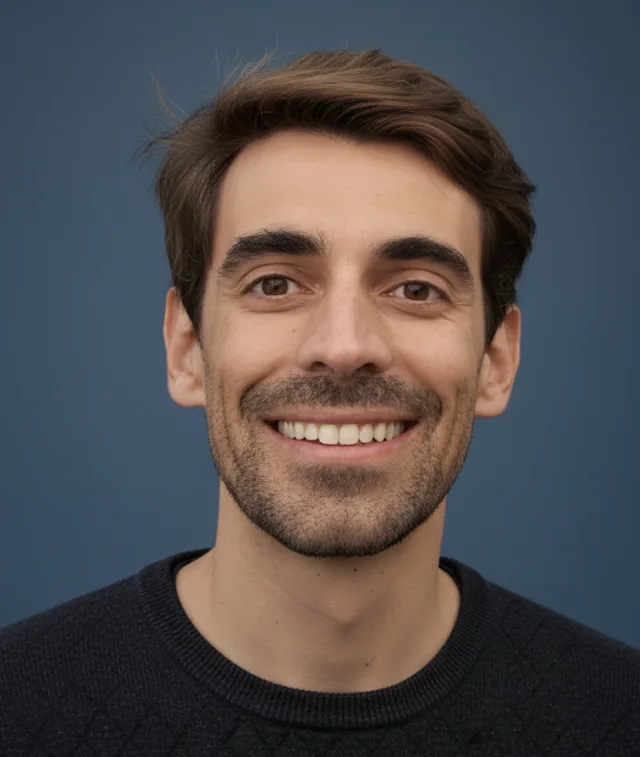
Portrait of Eduardo Mignot

Problem statement

The risk—and the constraint I want to work on.

I want to work on reducing existential risk from advanced AI, particularly the risk of loss of human control.

Abstract neural structure becoming increasingly difficult to control

01

Loss of control

As advanced AI systems become more capable and autonomous, humans may become less able to monitor, constrain or intervene in their behaviour.

The AI Security Institute is already tracking precursor capabilities that could make control harder to maintain, including self-replication, deception and strategic underperformance. Source

In a loss-of-control scenario, advanced AI systems could operate outside meaningful human control, with regaining control becoming extremely costly or impossible. Source


A large complex system looming over a smaller sphere

02

An existential risk

The significance of loss of control is its potential irreversibility and scale.

The International AI Safety Report identifies possible outcomes including “the marginalisation or extinction of humanity.” More broadly, existential risk includes scenarios in which humanity becomes permanently unable to determine its own future.

The objective of AI safety is therefore not simply to make AI systems more reliable. It is to preserve meaningful human control as AI capabilities increase.

Many streams of work narrowing through a structural bottleneck

03

The execution bottleneck

Reducing catastrophic AI risk will require progress across alignment, AI control, evaluations, governance and other safety interventions. But those interventions depend on organisations being able to execute them effectively.

AI-safety organisations report shortages of experienced operations, management and organisational leaders who can translate strategy into execution, coordinate complex work and help organisations scale. 80,000 Hours

Beacon similarly describes the catastrophic-risk ecosystem as operationally underserved. Beacon

This is the bottleneck I want to work on: increasing the capacity of organisations working to reduce catastrophic AI risk.

Theory of change

A mediated path to impact.

My impact would be indirect: relieving a constrained input to AI-safety work so that stronger interventions are more likely to change how dangerous systems are detected, constrained or governed.

  1. Senior operational capacity

    Apply existing career capital where execution is genuinely constrained.

  2. More effective organisations

    Improve prioritisation, coordination, systems and talent development.

  3. More, better and faster safety work

    Enable specialists to spend more time on their comparative advantage.

  4. Stronger risk-reduction interventions

    Support work across alignment, control, evaluations, governance and security.

  5. Dangerous systems better constrained

    Increase the chance that risk is detected, governed or prevented before deployment.

  6. Lower probability of catastrophic loss of control

    Preserve meaningful human control as AI capabilities increase.

A1

Operational capacity is genuinely constraining important work.

Senior operations, management and research-management roles remain difficult to fill.

A2

The organisations supported are working on high-value interventions.

Organisation and project selection are part of the theory of change.

A3

Additional capacity produces additional safety work.

Infrastructure matters only insofar as it makes the work it supports more effective.

A4

The downstream interventions actually reduce risk.

Operations is an enabler—not a substitute for technical or governance work that succeeds.

Comparative advantage

Where my existing career capital may be most useful.

My current hypothesis is that my relative fit is strongest in senior operator and programme roles where impact depends on five recurring capabilities.

01

Product-market-impact fit

Testing whether an intervention works for its intended users—and updating when evidence changes.

02

Resource allocation

Deciding where scarce people, time and attention create the most value, including stopping lower-value work.

03

Institution-building

Turning one-off initiatives into repeatable programmes, processes and operating systems.

04

Multiplier effects

Increasing the effectiveness and autonomy of other people rather than only producing individual output.

05

Implementation across boundaries

Getting interventions to work across leadership, technical teams, legal constraints and external stakeholders.

These are the areas where my existing career capital appears most relevant to the operational bottlenecks I see in AI safety.

Current work & career capital

Building domain context and testing fit.

I am deliberately combining existing operating experience with AI-safety learning, applied projects and field engagement.

AI safety learning & training

  • Lens AcademyAI Risk Fundamentals and AI Futures: Forecasting & Strategy.
  • BlueDot ImpactAI governance, AGI strategy and technical AI-safety foundations.

High-impact career direction

  • In-Depth EA ProgramCause prioritisation, impact and strategy.
  • CEA High-Impact Career BootcampComparing cause areas and testing career options.
  • HIP Impact AcceleratorOngoing career coaching, including EA and 80,000 Hours advising.

Applied work & field engagement

  • Arcadia ImpactAI incident knowledge and organisational governance.
  • CommunityActive with AI Safety Spain and the Moral Ambition Madrid Circle.
  • ConferencesEAGxOxford 2026; EAGxBerlin 2026 next.

If you are working on an AI-safety organisation or programme with a meaningful execution bottleneck, I would be glad to compare notes.